

Imagine you decide to open a premier fine-dining Italian restaurant in your city. You hire a master chef, design an exquisite menu, remodel the dining room with imported marble, and ensure the kitchen is spotless. You have created a world-class dining experience on your premises.
However, if not a single food critic writes a review, no local newspapers mention your opening, no culinary influencers recommend your signature pasta, and zero customers leave positive feedback online, your dining room will remain completely empty on Saturday night. It does not matter how delicious your food is if the outside world is completely unaware of your existence.
This simple analogy captures the essential relationship in search engine optimization: On-page SEO is building the world-class restaurant, while off-page SEO is what the outside world says about you.
You can write the most comprehensive, beautifully designed articles on your website, but without off-page SEO—specifically high-authority backlinks, digital PR mentions, and external brand credibility—Google has no objective way to verify whether your business is a genuine market leader or just an unproven newcomer making self-serving claims.
In this definitive master guide, we break down what off-page SEO is in plain English, why external authority signals dictate who wins page-one Google rankings, the crucial difference between high-impact and toxic backlinks, and the exact step-by-step workflow your business can use to earn defensible authority and attract paying customers.
- 95% of All Webpages Have Zero Backlinks: An extensive empirical study analyzing over 1 billion webpages conducted by Ahrefs found that 90.63% of content receives zero organic search traffic from Google, and 66.31% of pages have not a single referring domain linking to them.
- #1 Results Have 3.8x More Backlinks Than Positions 2 Through 10: Detailed search ranking data verified by Backlinko across 11.8 million Google search results proves that the top organic result on Google has an average of 3.8 times more external backlinks than positions 2 through 10.
- Backlinks Remain One of Google’s Top 3 Core Ranking Signals: Official engineering confirmations documented by Search Engine Land affirm that along with high-quality content and RankBrain algorithmic matching, external backlink authority constitutes one of Google’s three most decisive ranking pillars.
- Editorial In-Content Backlinks Out-Value Directory Links by 10x: Research published by HubSpot indicates that contextually embedded editorial links within trusted industry articles pass significantly more algorithmic trust and referral traffic than generic footer links or paid directory submissions.
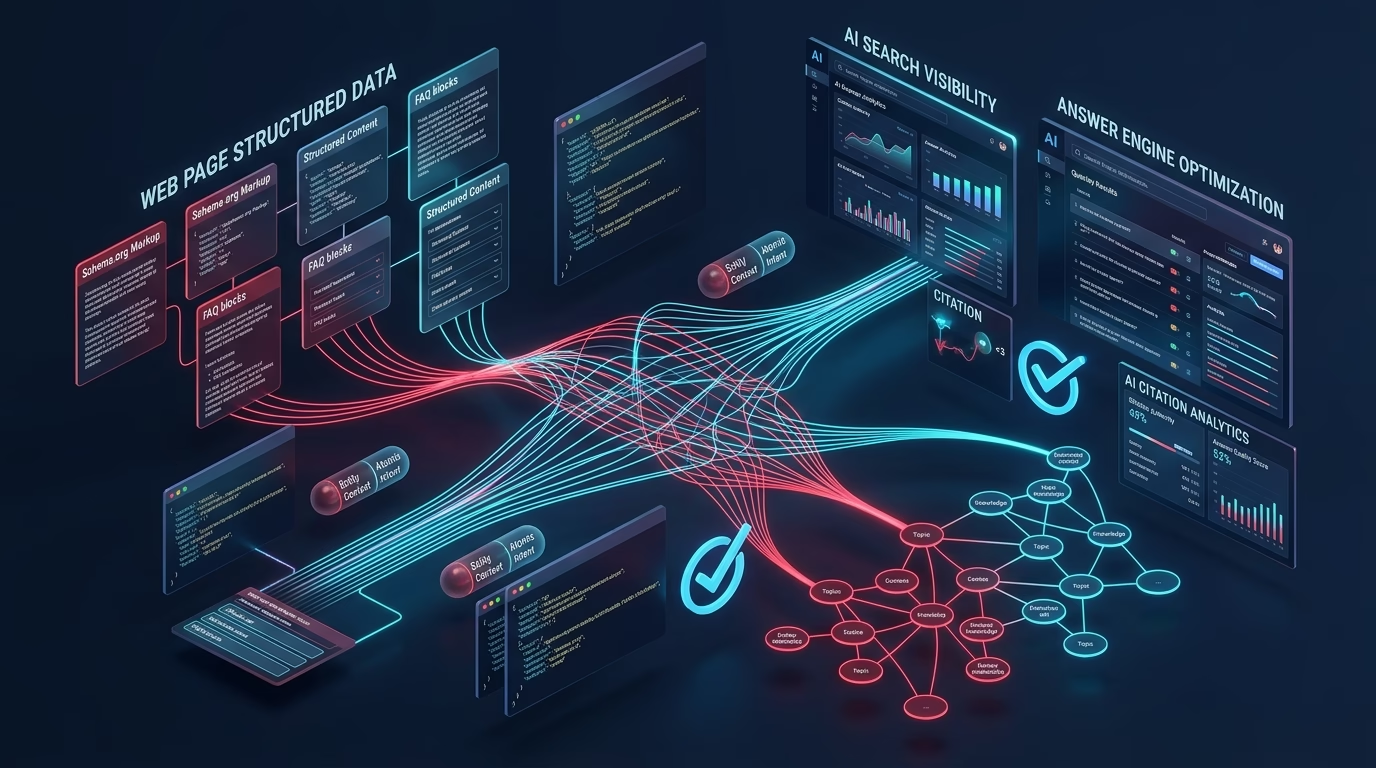
- Brand Co-Occurrence Influences Generative AI Knowledge Graphs: Technical analysis from Gartner confirms that conversational AI engines like ChatGPT, Claude, and Perplexity use web-wide entity co-occurrence and unlinked brand mentions to determine source veracity and citations.
On-Page vs. Off-Page vs. Technical SEO: Understanding the 3 Pillars
To succeed in organic search, your marketing strategy must balance three distinct but interconnected pillars of SEO. Understanding how they interact ensures you don’t over-invest in one area while completely neglecting another:
| SEO Pillar | What It Focuses On | Key Tactics & Deliverables | Where It Takes Place |
|---|---|---|---|
| 1. Technical SEO | Ensuring search engines can crawl, render, and index your website without friction | Site speed, Core Web Vitals, XML sitemaps, robots.txt, SSL encryption, schema markup | Under the hood of your website (code & server) |
| 2. On-Page SEO | Creating exceptional content that directly satisfies user search intent | Keyword targeting, H1–H3 headings, internal linking, copywriting, meta tags, image alt text | Directly on your visible webpages |
| 3. Off-Page SEO | Building external authority, trust, reputation, and third-party endorsements | Editorial backlinks, digital PR, brand mentions, guest thought leadership, local citations | Everywhere else across the open web |
Think of Technical SEO as the foundation of your house, On-Page SEO as the rooms, furniture, and interior design, and Off-Page SEO as the neighborhood reputation and property appraisal. If your house has a great foundation and beautiful interior, but sits in an unaccredited wasteland, nobody will pay premium value for it. Off-Page SEO provides the third-party validation that makes Google confident in sending visitors your way.
Visual Architecture: The Off-Page Authority Building Ecosystem
To visualize how external trust signals, editorial backlinks, and digital PR work together to elevate your website into an authoritative market leader, examine the architecture blueprint below:
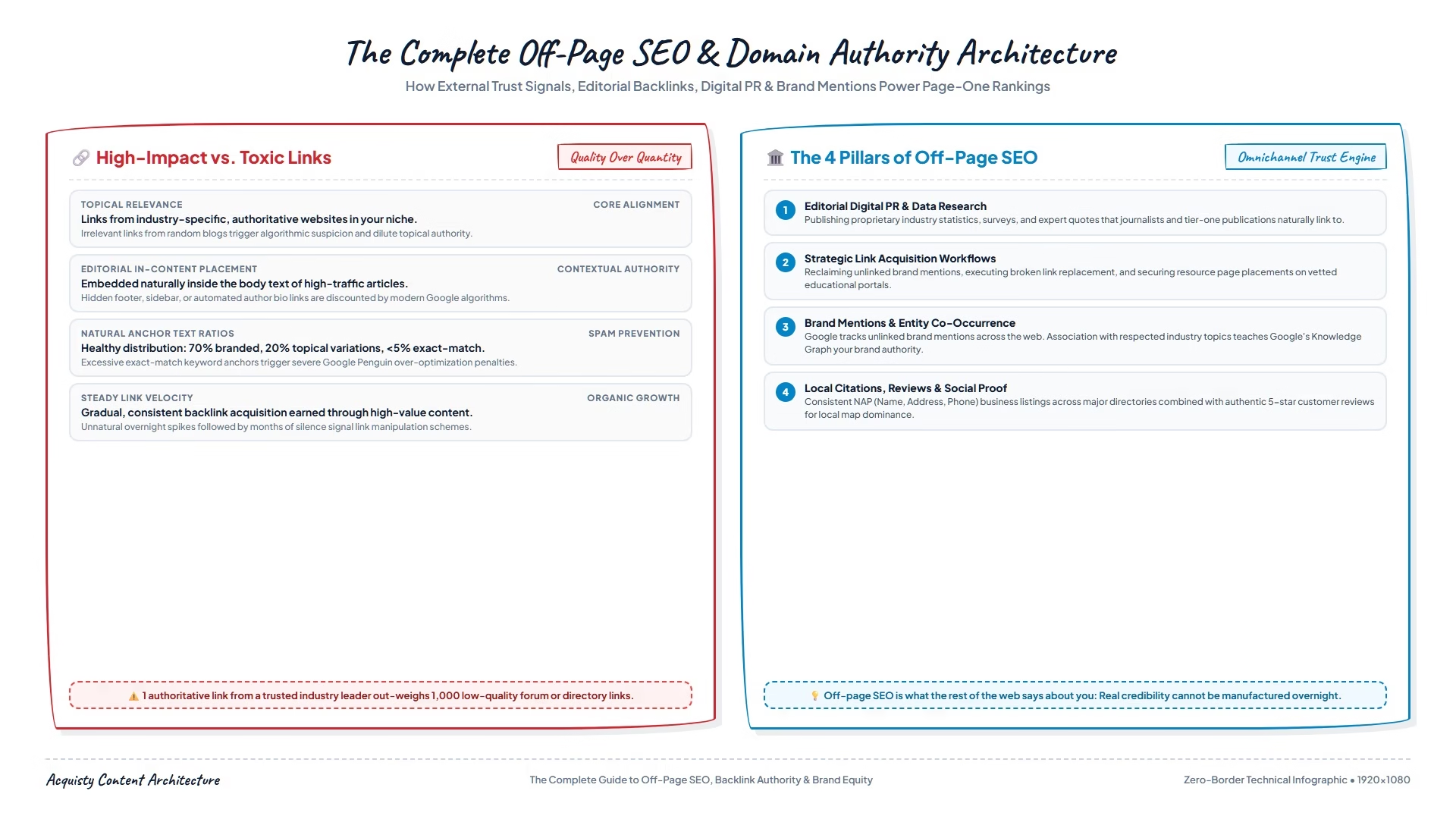
The 4 Core Pillars of Modern Off-Page SEO
Many business owners mistakenly believe that off-page SEO is strictly about blasting thousands of backlinks across the web. In modern search, Google’s sophisticated machine-learning algorithms evaluate off-page authority through four comprehensive pillars:
Pillar 1: High-Authority Editorial Backlinks
A backlink is an HTML hyperlink from another website that points to your domain. In Google’s original PageRank algorithm—and still today—backlinks serve as digital votes of confidence. However, not all votes are created equal. A link from a trusted, high-traffic industry publication like Forbes, TechCrunch, or an established university domain (.edu) carries vastly more algorithmic weight than a link from an obscure, low-quality blog.
Furthermore, Google analyzes the specific link attributes:
• Dofollow Links (Standard): Passes full search equity (PageRank) directly to your page, boosting your organic rankings.
• Nofollow Links (
rel="nofollow"
): Signals to crawlers not to pass direct PageRank, but still delivers valuable referral visitors, brand visibility, and algorithmic trust hints.
• Sponsored Links (
rel="sponsored"
): Applied to paid advertisements, sponsored guest posts, and commercial affiliate links to comply with Google guidelines.
• UGC Links (
rel="ugc"
): Designated for user-generated content, such as forum discussions and blog comments.
Pillar 2: Digital PR & Media Placements
Digital PR is the practice of securing press coverage, expert interviews, and media mentions on reputable news outlets and industry blogs. Instead of manually begging webmasters for links, digital PR creates stories, unique proprietary research reports, and survey findings that journalists actively want to write about. When a respected journalist cites your company’s research as the primary source, you earn authoritative, tier-one backlinks that competitors cannot easily replicate.
Pillar 3: Brand Mentions & Entity Authority
Google’s search engine is no longer just a keyword-matching database; it is an intelligent Knowledge Graph that understands real-world entities (companies, people, places, and concepts). Google monitors unlinked brand mentions across news portals, social media platforms, podcasts, and industry forums. When trusted websites frequently discuss your company alongside relevant industry topics—even without a direct hyperlink—Google connects the dots and elevates your brand’s topical authority in your industry.
Pillar 4: Local Citations, NAP Consistency & Reviews
For regional service providers and multi-location businesses, off-page SEO heavily revolves around local citations and public review profiles. A local citation is any online mention of your company’s Name, Address, and Phone Number (NAP) on platforms like Google Business Profile, Apple Maps, Yelp, Bing Places, and industry-specific business directories. Consistent NAP data combined with authentic, positive customer reviews directly drives rankings in the coveted Google Local 3-Pack.
📖 Recommended Reading
Anchor Text in SEO: The Complete Guide to Safe Link Ratios & Avoiding Google Penalties — Learn how to distribute your anchor text naturally to maximize the ranking power of every backlink without triggering algorithmic over-optimization filters.
The Anatomy of a High-Impact Backlink: What Makes a Link Valuable?
One of the biggest traps in off-page SEO is prioritizing backlink quantity over backlink quality. A single contextual link from an authoritative, relevant industry leader can dramatically out-rank thousands of low-quality directory or forum links. When evaluating prospective link opportunities, Google judges five essential criteria:
1. Strict Topical Relevance:
The referring website and the specific page linking to you must be topically related to your business. If you operate an enterprise B2B software platform, a link from a respected technology blog is immensely powerful. A link from a random recipe website or a pet grooming forum, by contrast, provides virtually zero ranking benefit and looks unnatural to search algorithms.
2. Domain Authority & Page Trust:
Google evaluates the overall authority of the linking domain and the specific URL hosting the link. Websites with extensive histories, strong editorial standards, and clean backlink profiles pass substantial PageRank authority. Tools like Moz (Domain Authority), Ahrefs (Domain Rating), and SEMrush (Authority Score) provide helpful commercial metrics to gauge a domain’s relative strength.
3. Contextual In-Content Placement:
Where the link appears on the webpage matters immensely. A link naturally embedded within the primary editorial body text of a well-written article passes maximum authority. Links placed in footers, sidebars, or automated author bio boxes are discounted by Google because users rarely click them.
4. Natural Anchor Text Distribution:
The clickable text of the hyperlink (the anchor text) gives Google crucial context about the destination page. However, repeatedly building links with exact-match commercial keywords (e.g., “best SEO agency”) triggers Google Penguin spam penalties. Maintain a natural, healthy ratio: 70%+ branded anchors, 20% topical variations, and under 5% exact-match keywords.
5. Real Human Organic Traffic:
The ultimate test of a backlink’s authenticity is whether the linking page receives real organic traffic from Google. If a page ranks for keywords and attracts real human readers, a link on that page is genuinely valuable. If the linking page receives zero monthly visits from search engines, Google considers it a low-value link repository.
Step-by-Step Walkthrough: 6 Proven Off-Page SEO Strategies That Work
You do not need to resort to shady tactics or spam emails to build an authoritative off-page SEO footprint. Follow this structured, six-step execution playbook to build defensible domain authority:
Step 1: Audit Your Existing Backlink Profile & Disavow Toxic Links:
Before launching new link-building campaigns, inspect your existing backlink profile using tools like Google Search Console, Ahrefs, or SEMrush. Identify any spammy, automated links originating from hacked sites, foreign link farms, or adult networks. If your site was previously subjected to negative SEO or reckless historical link purchases, compile a clean disavow file to protect your domain from manual actions.
Step 2: Create Proprietary “Link-Magnet” Content Assets:
Other websites do not link to basic commercial service pages; they link to valuable resources that make their own articles better. Publish original industry benchmarks, comprehensive survey reports, interactive calculators, or definitive glossary hubs. When other bloggers and journalists need a reputable source to back up a claim, your link-magnet asset naturally captures the citation.
Step 3: Reclaim Unlinked Brand Mentions:
Over time, news articles, podcasts, review sites, and partner blogs will mention your company name or founders without including a clickable hyperlink. Use Google Alerts, BuzzSumo, or Brand24 to monitor mentions of your brand. When an unlinked mention appears, send a polite, friendly email thanking the author for the shout-out and asking if they would consider turning the brand mention into a helpful link for their readers.
Step 4: Execute Strategic Broken Link Building:
Websites are constantly updating, redesigning, and retiring content, leaving behind thousands of dead links (404 errors) across your industry. Find authoritative resource pages in your niche and run a free broken link checker plugin. When you find a dead link to a retired resource, contact the webmaster, alert them to the broken link on their page, and recommend your active, updated guide as an ideal replacement.
Step 5: Capitalize on Journalist Requests via Digital PR:
Journalists at top-tier publications are on tight daily deadlines and constantly need expert quotes and industry commentary. Sign up for platforms like Connectively (formerly HARO), Featured.com, and Qwoted. Respond promptly to relevant reporter queries with concise, actionable insights. In exchange for your expert commentary, journalists frequently provide a high-authority editorial link back to your website.
Step 6: Contribute Authoritative Guest Thought Leadership:
Identify respected publications and non-competing software providers in your vertical that accept guest contributors. Pitch data-backed, comprehensive topic ideas that solve pressing challenges for their audience. Contributing a genuinely helpful, high-value guest article builds executive reputation, exposes your brand to an established audience, and earns a permanent in-content backlink.
If your leadership team wants to accelerate your domain authority and secure tier-one editorial media placements without wasting hundreds of hours on manual outreach, explore our dedicated professional SEO services to build an enduring competitive moat.
How Off-Page SEO Dictates Visibility in Generative AI Search Engines
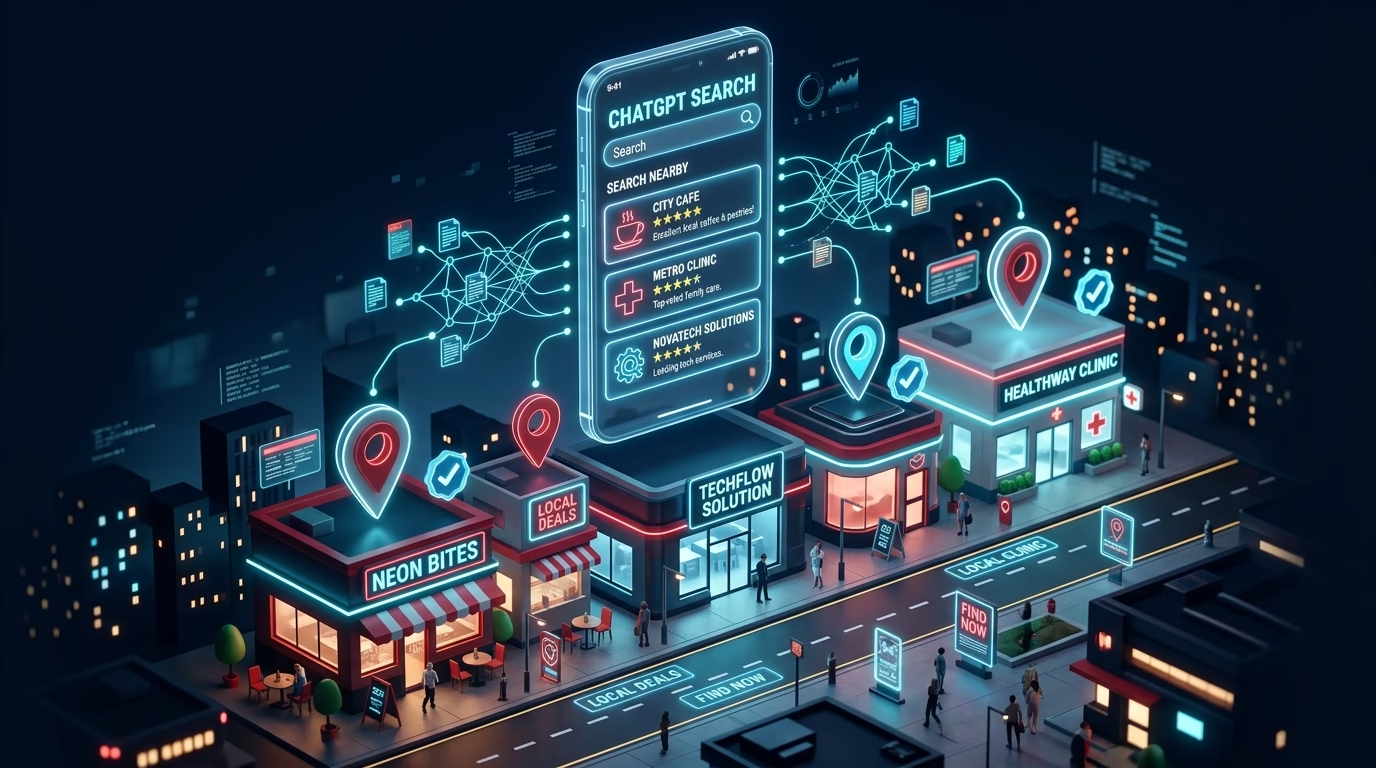
The rise of conversational AI answer engines—such as ChatGPT Search, Perplexity AI, Claude, and Google AI Overviews—has led some marketers to wonder whether traditional off-page SEO still matters. The reality is that off-page SEO is more critical now than ever before.
Large Language Models (LLMs) operate by scanning vast corpora of crawled web data to synthesize direct answers for users. When an executive asks ChatGPT, “What are the best enterprise technical SEO agencies for B2B SaaS companies?”, the AI does not check who has the prettiest webpage. It analyzes the external web consensus:
If your website has zero external backlinks and zero brand citations across the web, AI models have no basis to trust your claims. By building a robust off-page SEO footprint, you train AI search engines to recognize your brand as the primary, authoritative answer to recommend to prospective buyers.
10 Costly Off-Page SEO Mistakes & Black-Hat Traps to Avoid
Because link building can be challenging and time-consuming, the search industry is filled with low-quality shortcuts that promise overnight results. Falling for these black-hat traps can result in severe algorithmic penalties or permanent removal from Google’s search index. Protect your business by avoiding these ten fatal errors:
1. Buying Cheap Backlink Packages on Marketplaces (Fiverr, Upwork):
Purchasing “5,000 High-PR Backlinks for $50” is the fastest way to get your website penalized. These packages consist of automated spam comments, hacked forums, and low-tier link networks that Google’s SpamBrain system flags instantly.
2. Participating in Private Blog Networks (PBNs):
PBNs are networks of expired domains set up solely to pass artificial link equity. Google actively identifies and de-indexes PBNs. When a network is caught, every single client site linked to it suffers catastrophic traffic loss.
3. Over-Optimizing Exact-Match Anchor Text:
Forcing exact commercial keywords into every backlink anchor (e.g., “emergency plumber Chicago”) looks completely artificial. Natural backlink profiles feature diverse anchor text dominated by brand names, naked URLs, and conversational phrases.
4. Ignoring Topical Relevance:
A backlink from an unrelated high-DR domain (e.g., a sports blog linking to a corporate tax software provider) passes minimal contextual authority. Prioritize niche relevance over raw vanity authority metrics.
5. Engaging in Reciprocal Link Exchanges (“You link to me, I link to you”):
Excessive two-way link swaps are easily detected by search crawlers. While occasional natural cross-referencing is fine, organized reciprocal schemes violate Google guidelines.
6. Blasting Low-Quality Blog Comment & Forum Spam:
Automated bots dropping links into comment sections and message boards generate zero value. These links are universally marked as
rel="ugc"
or
rel="nofollow"
and signal low-quality desperation.
7. Neglecting Local Citations & Google Business Profile:
For regional businesses, ignoring local directory consistency and public customer reviews leaves your business invisible in local Google Maps searches.
8. Failing to Reclaim Broken Internal and External Links:
When high-authority external sites link to pages on your website that you later delete or move without setting up a 301 redirect, that link equity is wasted on a 404 error page. Regularly audit and reclaim broken link equity.
9. Relying Solely on a Single Link-Building Tactic:
A resilient off-page profile is diverse. Balancing digital PR, guest articles, resource page mentions, and unlinked brand reclamations protects your website from algorithmic changes.
10. Stopping Link Acquisition After Reaching Page One:
Competitors below you are constantly building new links to overtake your positions. Off-page SEO is a continuous process of maintaining domain authority and reinforcing your market leadership.
To learn more about the broader business impact of organic search and how to compound revenue sustainably, read our comprehensive guide on the benefits of SEO for growing companies.
The 7 Core Backlink Types: Which Ones Actually Move the Needle?
In the world of off-page SEO, not all backlinks serve the same purpose or pass the same degree of search equity. Understanding the hierarchy of backlink types allows your team to focus effort on links that genuinely impact search rankings and revenue:
1. Tier-One Editorial Mentions (Highest Value):
These are unsolicited links earned when journalists, mainstream media outlets, and tier-one industry blogs cite your company’s data, products, or leadership commentary. Because these links require rigorous editorial oversight and cannot be bought or faked, Google treats them as the strongest possible vote of confidence.
2. Authoritative Guest Thought Leadership:
Publishing guest articles on non-competing, respected industry publications exposes your brand to an established target audience and earns an in-content contextual link. When done selectively on high-DR, high-traffic domains, guest contributions pass substantial topical authority.
3. Industry Association & Accreditation Listings:
Links from official industry bodies, trade councils, Better Business Bureau (BBB), and Chamber of Commerce portals establish verified organizational credibility. While these links rarely drive viral referral traffic, they provide strong trust signals that anchor your brand in Google’s Knowledge Graph.
4. Resource Page & Educational Portal Links (.edu):
Curated resource guides, university career centers, and educational research libraries compile helpful tools for students and professionals. Securing a recommendation on a reputable .edu or municipal .gov portal carries immense algorithmic weight due to the strict editorial vetting of academic domains.
5. Podcast & Video Interview Show Notes:
Appearing as a guest on industry podcasts and YouTube shows provides multi-channel exposure. Podcast hosts almost always include a link to the guest’s company website in the episode show notes on their high-authority domain, generating natural contextual backlinks.
6. Technology Partner & Vendor Integration Pages:
If your business integrates with popular software platforms, uses specific enterprise tools, or partners with other agencies, ensure you are listed in their official partner directories and app marketplaces. These commercial partner links are highly vetted and demonstrate verified industry relationships.
7. Free Utility, Template & Calculator Assets:
Developing a free, high-utility tool (such as an ROI calculator, interactive audit widget, or downloadable template) creates an automated link magnet. Webmasters across your industry will naturally link to your utility page as a recommended tool for their own readers.
How to Measure Off-Page SEO Success: Key Authority Metrics for Leadership
Tracking the effectiveness of an off-page SEO campaign goes far beyond simply counting how many links were built last month. Senior marketing leaders and founders should monitor these five key metrics to evaluate authority growth and business impact:
The 5 Essential Off-Page SEO Performance Indicators:
- Net Referring Domains (Root Domains): Focus on the number of unique, reputable websites linking to you, rather than raw total backlinks. Earning 50 links from 50 different domains is infinitely more powerful than earning 500 links from a single domain.
- Domain Authority (DA / DR) Trajectory: Monitor the steady, upward trajectory of your domain authority score in Moz or Ahrefs. Consistent link acquisition should yield steady authority gains over 6 to 12 months.
- Organic Traffic Velocity to Commercial Target Pages: Track whether organic impressions, clicks, and keyword rankings are rising on the specific high-value service pages receiving internal link equity from your backlink assets.
- Unlinked Brand Mentions & Share of Voice: Use social listening and media monitoring to track how frequently your company is mentioned across industry news outlets compared to your top competitors.
- Referral Pipeline & Assisted Revenue: Monitor Google Analytics 4 (GA4) referral traffic to measure how many qualified inbound leads, demo requests, and customer conversions originate directly from external editorial link placements.
When off-page SEO is managed with strategic discipline, it stops being an abstract vanity exercise and becomes a reliable, high-yield driver of enterprise valuation and customer acquisition.
Actionable 30-Day Off-Page Authority Implementation Sprint
To prevent off-page SEO from feeling overwhelming, follow this prioritized 30-day implementation roadmap designed for marketing teams and business founders:
Week 1: Backlink Profile Audit & Low-Hanging Reclamations:
Export your existing backlink profile from Google Search Console. Identify toxic links from known scraper networks and compile a disavow file. Next, run an unlinked brand mention audit to identify articles that cite your company without linking. Reach out to authors with personalized, courteous requests to convert mentions into active links.
Week 2: Proprietary Link-Magnet Asset Development:
Survey your customer base or analyze your platform’s internal data to identify an interesting industry trend or statistical benchmark. Create an in-depth data study or practical utility calculator on your website with visual charts. This asset will serve as the anchor for all proactive outreach campaigns.
Week 3: Targeted Digital PR & Journalist Outreach:
Monitor daily media queries on Connectively, Qwoted, and Featured. Provide tailored, data-backed commentary to journalists covering your sector. Pitch your newly published benchmark study to relevant trade bloggers, offering exclusive early insights or custom data quotes.
Week 4: Ecosystem Integration & Customer Review Sprint:
Ensure your business is properly verified and listed across industry directories, technology partner directories, and local map profiles. Launch an automated email follow-up sequence encouraging satisfied clients to leave authentic reviews on your Google Business Profile and industry review platforms.
Frequently Asked Questions About Off-Page SEO
Ready to Build Defensible Domain Authority That Dominates Search?
Don’t let low-authority competitors outrank you on Google. Partner with Acquisty’s digital PR and off-page SEO specialists to secure high-impact editorial backlinks, establish verified brand authority, and turn organic search into an enduring revenue driver for your business.