

Every modern brand recognizes the famous adage: “Content is King.” Yet, in an era where millions of AI-generated articles flood the web daily, the vast majority of corporate content marketing operations fail to generate a single dollar of measurable pipeline revenue.
Why? Because most organizations still view content marketing through an obsolete 2018 lens—treating it as a volume-driven publishing exercise designed to churn out generic keyword-stuffed blog posts. Today, search algorithms, generative answer engines (ChatGPT, Perplexity, Gemini), and discerning B2B buyers have evolved. They actively filter out superficial fluff and gravitate toward authoritative, original, and deeply structured intellectual assets.
True modern content marketing is not merely publishing words on a screen; it is the strategic discipline of building compounding brand equity, establishing undeniable topical authority, capturing zero-click generative search citations, and driving qualified enterprise pipeline across the entire customer lifecycle.
In this master guide, Acquisty’s Content Strategy & Search Architecture team deconstructs the definitive enterprise framework for building, executing, and scaling a revenue-first content marketing engine today.
- 83% Documented Strategy Correlation: Annual enterprise research by the Content Marketing Institute (CMI) reveals that 83% of top-performing B2B organizations attribute their market leadership to a documented content architecture, versus only 14% of bottom performers.
- 3x Lead Generation at 62% Lower Cost: Rigorous benchmarking by Demand Metric demonstrates that content marketing produces 300% more organic leads per dollar spent compared to traditional outbound marketing while costing 62% less to sustain over time.
- 67% Inbound Pipeline Growth: Comparative marketing analytics published in the HubSpot State of Marketing Report establish that companies publishing structured topical clusters generate 67% more qualified inbound leads per month.
The Modern Content Marketing Paradigm: Publishing commoditized “how-to” articles that rephrase the top 10 search results is officially dead. Generative AI models synthesize generic answers in seconds. In 2026, content marketing is an intellectual capital race. True enterprise authority is built on Information Gain—producing proprietary data, contrarian expert frameworks, and specialized multi-modal assets that neither AI nor competitors can easily replicate.
1. Deconstructing Modern Content Marketing: Definition, Purpose & ROI
Content Marketing is a strategic marketing approach focused on creating, publishing, and distributing valuable, relevant, and consistent multi-modal content to attract, educate, and retain a clearly defined audience—ultimately driving profitable customer action.
Unlike direct advertising (PPC or paid display ads) that rents temporary attention and stops generating leads the moment you pause ad spend, content marketing builds permanent digital real estate. A high-value research report or strategic comparison guide published today compounds in organic search, AI citations, and inbound lead velocity for years to come.
When integrated seamlessly with advanced Search Engine Optimization (SEO) and AI SEO engineering, content marketing achieves four transformative business outcomes:
2. The Core Formats & Types of Modern Content Marketing
High-growth enterprises do not rely on a single content format. They deploy an integrated, multi-modal content ecosystem tailored to different buyer consumption preferences:
A. Flagship Pillar Guides & Topical Authority Hubs
Comprehensive, 3,000+ word foundational assets that thoroughly cover an entire broad subject (such as this guide). Pillar hubs establish topical dominance on Google and serve as the central anchor linking out to specialized cluster pages, such as our guides on SaaS SEO strategies and FinTech search growth.
B. Proprietary Empirical Research & Benchmark Reports
Original survey data, annualized pricing indexes, and platform analytics benchmarks. Original research is the #1 driver of high-tier editorial backlinks from Forbes, Bloomberg, and Wall Street Journal, while securing high Information Gain scores from Google’s ranking algorithms.
C. Bottom-of-Funnel (BOFU) Comparison & Alternative Silos
High-intent decision assets comparing specific software tools, service providers, or methodology alternatives (e.g., “Acquisty vs Traditional Agencies” or “Custom Next.js vs No-Code”). BOFU silos capture ready-to-buy decision makers at the exact moment of commercial evaluation.
D. Executive Thought Leadership & Social Micro-Essays
Bite-sized, perspective-driven breakdowns published across social media marketing channels like LinkedIn and X. Executive thought leadership builds personal credibility for founders and C-level executives, sparking viral industry discussions.
E. Interactive Calculators, Assessments & Tools
Custom interactive widgets, such as free SEO audit tools, CAC calculators, or compliance graders built via modern website development. Interactive assets boast 4x higher lead-capture conversion rates than static downloadable PDFs.
The 1:5 Repurposing Rule: Never create a content asset for a single channel. For every core research report or comprehensive pillar guide published, engineer five secondary derivative assets: an executive LinkedIn micro-essay, a video teardown for YouTube, an interactive ROI calculator, an infographic for digital PR outreach, and an effective email marketing newsletter deep-dive.
📖 Recommended Reading
Mastering Zero-Click Content Architecture for the AI-First Era — Learn how to structure knowledge hubs, factual schemas, and zero-click answer blocks that capture conversational AI visibility.
3. The Full-Funnel Content Architecture: TOFU, MOFU & BOFU Alignment
An effective content engine guides prospects seamlessly through the three fundamental stages of the customer journey:
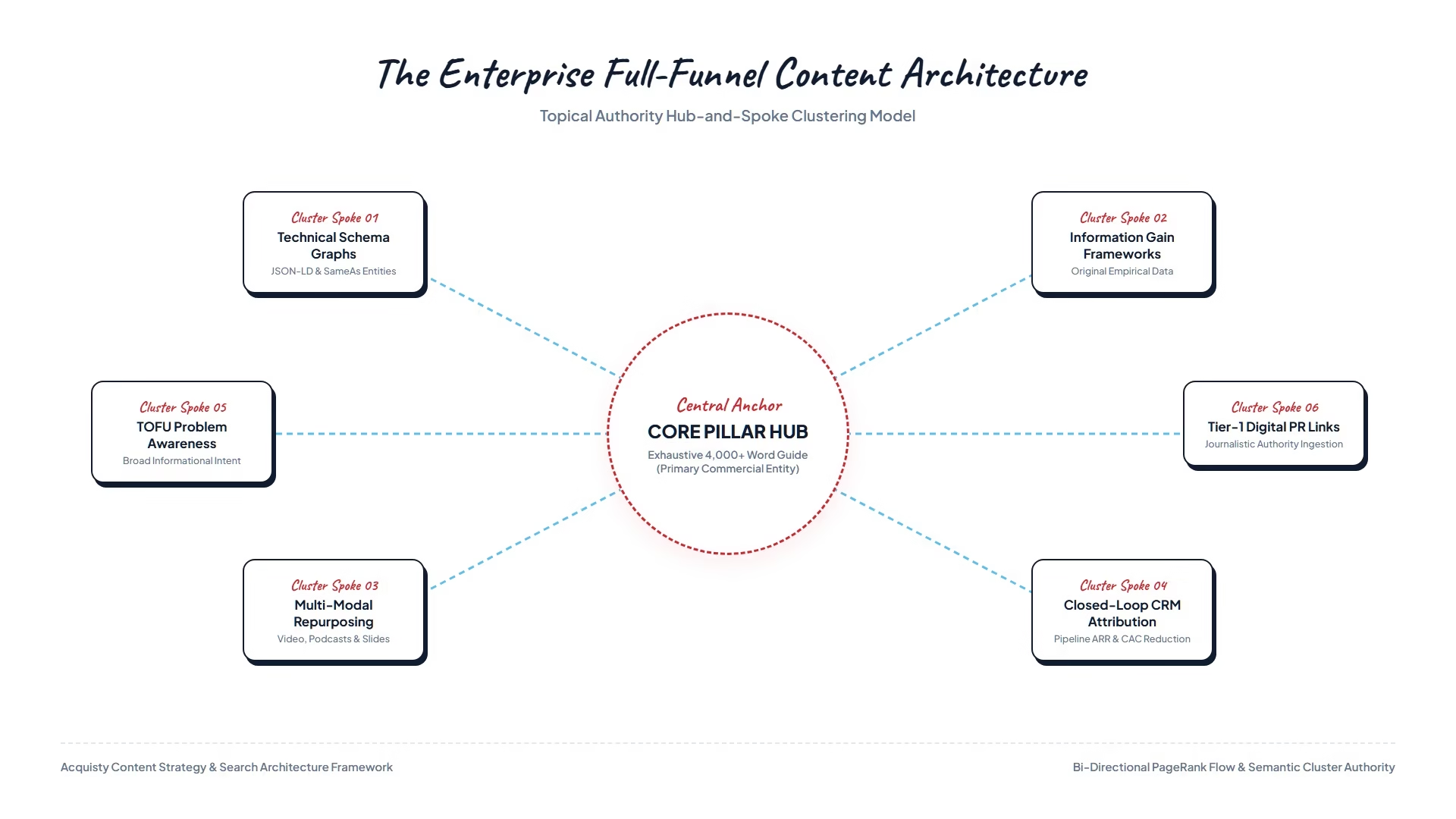
Topical Authority Law: Search engines evaluate your entire domain’s depth on a topic, not individual isolated URLs. If you publish a flagship guide on “Enterprise SEO” without supporting cluster articles on “Technical Schema”, “Core Web Vitals”, “RAG Ingestion”, and “Server-Side Rendering”, your domain lacks semantic completeness and will struggle to outrank specialized topical authorities.
4. The Topical Authority Clustering Model: Hub-and-Spoke Architecture
Modern search engines like Google use neural embeddings and semantic entity graphs to evaluate an entire domain’s topical completeness. The most powerful structural framework for establishing topical authority is the Hub-and-Spoke Model (Topic Clusters):
5. Strategic Comparison: Legacy Content vs. Acquisty Revenue-Driven Content Engine
Examine how Acquisty’s engineering-led content architecture outpaces traditional agency retainers and commoditized AI content mills:
6. The 8-Step Blueprint for Building an Enterprise Content Marketing Engine
To build a repeatable, scalable content production framework that drives commercial growth, follow this 8-step enterprise roadmap:
7. Closed-Loop CRM Revenue Attribution: Measuring Real Commercial ROI
The ultimate test of an enterprise content marketing program is its contribution to the sales pipeline. In 2026, progressive CMOs move beyond vanity metrics like organic pageviews and social impressions by implementing multi-touch attribution models:
8. Frequently Asked Questions (FAQ) About Content Marketing
9. Scale Your Organic Revenue Engine with Acquisty
Building a market-leading content marketing engine requires more than just writers; it requires search engineers, subject matter researchers, data analysts, and conversion specialists.
At Acquisty, we design and execute full-funnel content marketing systems for high-growth scaleups and enterprise market leaders across India, the US, UK, and global markets. We turn complex industry expertise into high-converting digital assets that dominate Google, capture AI answer citations, and drive predictable inbound revenue.
Ready to transform your content into a high-ROI organic pipeline driver? Claim your comprehensive content & search audit today or schedule an executive strategy consultation with our growth directors.
Scale Predictable Pipeline with Enterprise Content Architecture
High-growth brands do not produce commoditized content; they engineer topical authority hubs that capture full-funnel organic demand. Acquisty’s content strategists design data-driven pillar architectures that convert readers into enterprise pipeline.