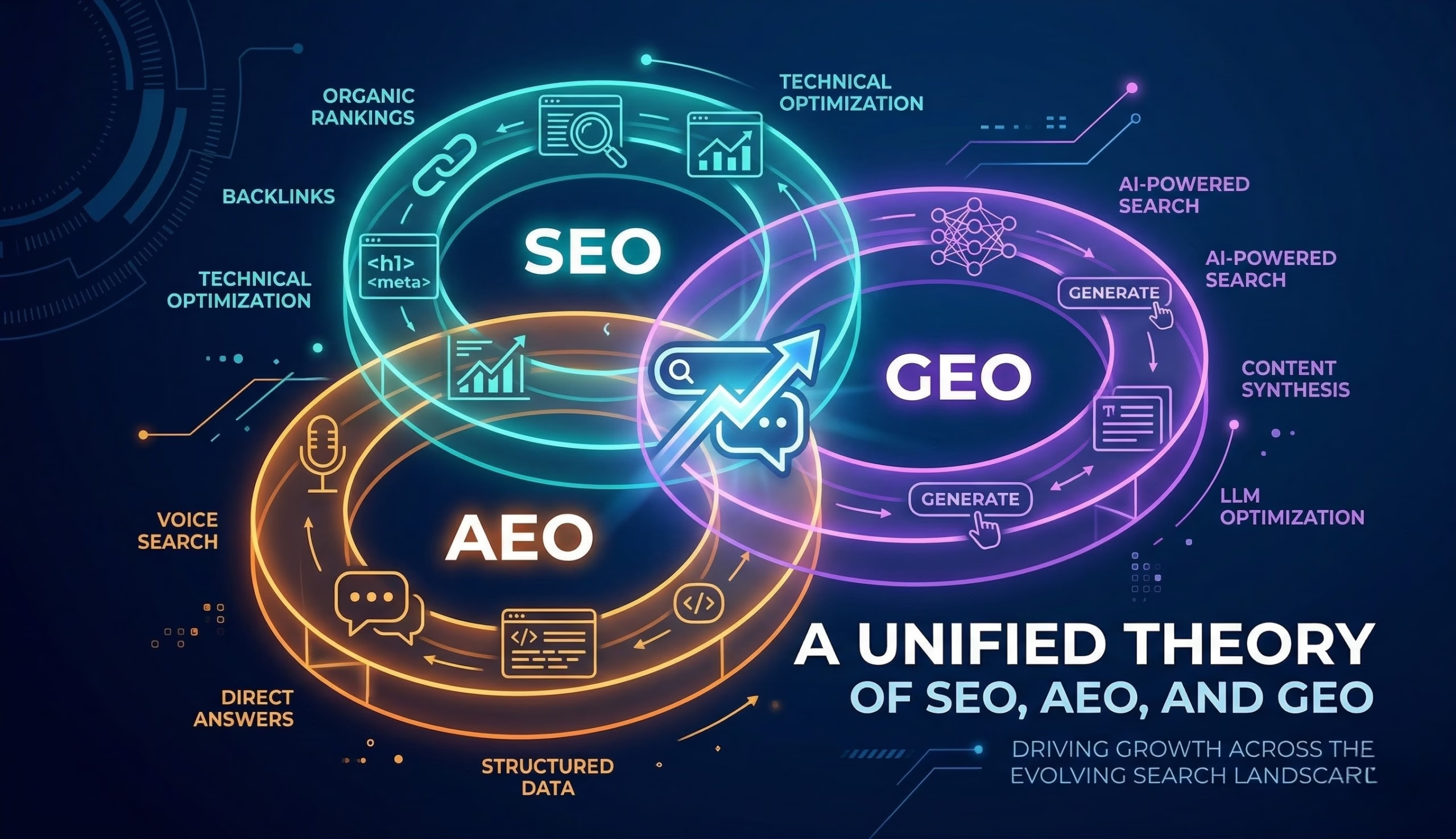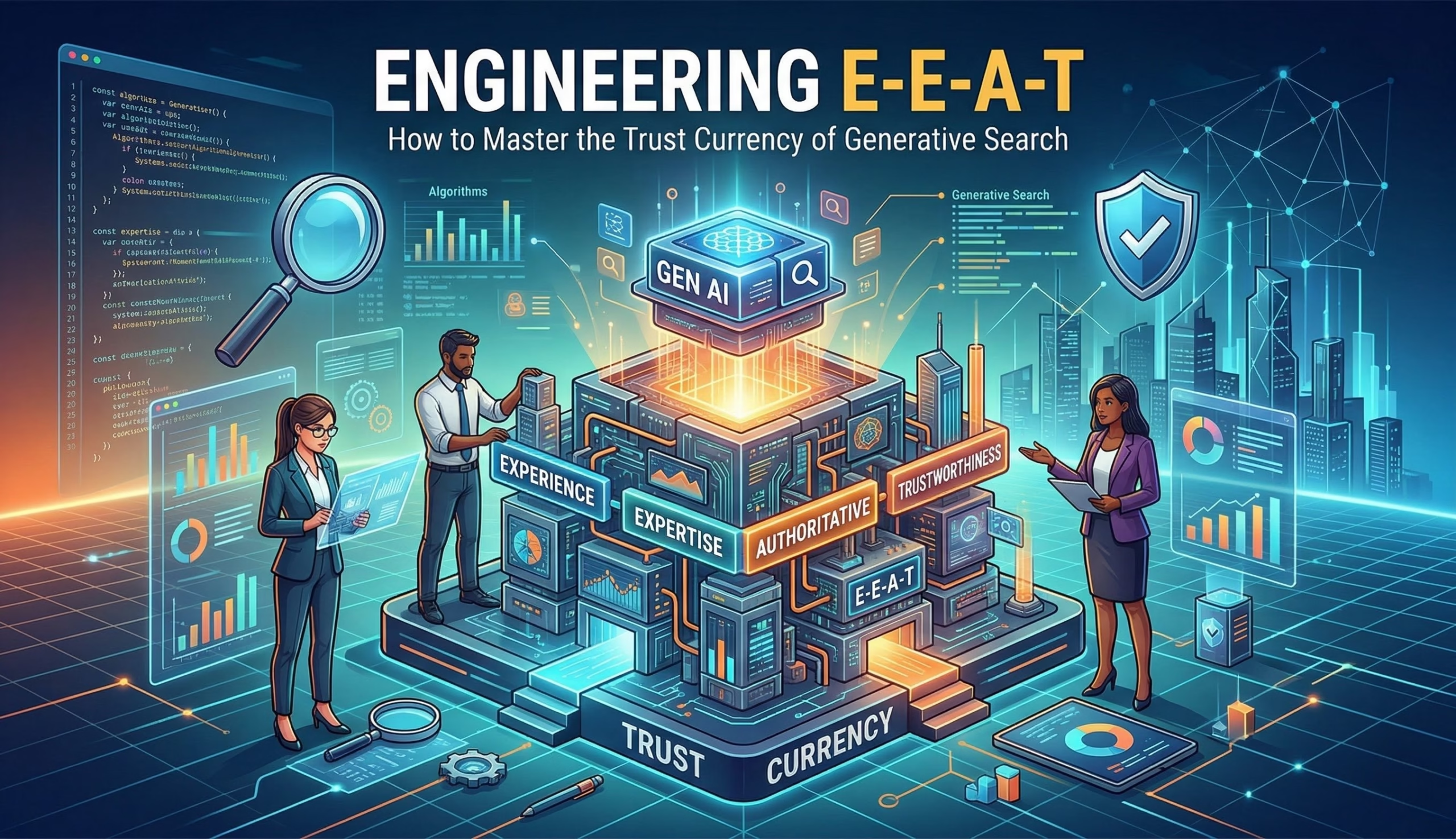



The traditional SEO playbook is currently undergoing its most radical transformation since the birth of the Google algorithm. We are no longer writing just for a blue link on a search results page, we are writing for the LLM (Large Language Model) “Lift.”
In this new reality, users often get their answers directly from AI Overviews (SGE) or chatbots like Gemini and ChatGPT without ever clicking a link. While some see this as the “death of traffic,” at Acquisty, we see it as an unprecedented opportunity for brand authority.
To win in 2026, you don’t need more content, you need Zero-Click Content Architecture. This is the art of structuring data so AI engines can extract, credit, and display your insights as the definitive answer.
What is Zero-Click Content Architecture?
Zero-Click Content Architecture is a structural philosophy where content is engineered for machine readability and instant information retrieval. Instead of a narrative flow designed solely for a linear human reader, the content is broken down into “extractable blocks.”
AI engines search for high-density information packets that they can easily synthesize into a summary. If your content is a dense wall of text, the AI will bypass you for a competitor who has “pre-chewed” the data into structured formats.
Why Acquisty Leads the AI-SEO Shift
At Acquisty, we’ve spent the last decade evolving with the web. We realized early on that AI-SEO isn’t about gaming a system, it’s about becoming the system’s most reliable source. By architecting your site’s content, we ensure that even if a user doesn’t click, your brand is the “brain” powering the answer.
1. The Power of “Answer Cards” (The Executive Lead)
Modern SEO requires giving away the “gold” immediately. The days of burying the lead to increase “time on page” are over. If the AI can’t find the answer in the first 20% of your page, it likely won’t feature you.
The 90–120 Word Executive Summary
Every high-value service page or blog post should lead with an Answer Card. This is a standalone, 90–120 word block that provides a comprehensive executive summary of the topic.
By positioning this at the very top, you define the context for the AI before it crawls the rest of the page.
2. Evidence Pages : Becoming the “Raw Data” Source
LLMs are prone to hallucinations, which makes them crave one thing above everything else : Hard Evidence. For example, to be an AI-SEO leader, your website must function as a repository of “Primary Intelligence.”
Structured Data Tables & Cited Statistics
We recommend the use of Evidence Pages. These are deep-dive sections or standalone pages that prioritize :
For example, When an AI engine looks for “Which AI-SEO service has the highest ROI?” it looks for a table. If Acquisty provides that table, we become the cited source in the chatbot’s response.
Want to know how your website is doing?
Enter your domain below and get an Instant Audit, for free !
3. Modular Formatting : Question-First Hierarchy
The way we structure headers (H2s and H3s) has changed. We no longer use “clever” or “punny” headlines. We use Question-First Headers.
The “Prompt-Matching” Strategy
AI queries are increasingly conversational. People ask, “How do I structure a website for AI search?” instead of typing “AI SEO structure.”
To rank for these commercial terms, your H2s should mirror these prompts :
The Four-Sentence Rule
To maintain “Modular Formatting,” no paragraph should exceed four sentences. This creates a high-white-space environment that is easy for human eyes to scan and even easier for AI “tokens” to process. Short, punchy paragraphs reduce the noise-to-signal ratio, making your core points stand out to crawling bots.
4. Winning Complex Prompts with Contrarian FAQs
Standard FAQs are boring. “What is SEO?” is a dead-end question. To capture high-intent commercial traffic, you need to answer the questions your competitors are afraid to touch.
The “When Not to Use X” Framework
AI engines are programmed to provide “balanced” and “nuanced” views. If you only talk about how great your service is, the AI might flag your content as biased or promotional.
By including Contrarian FAQs, you provide the nuance the AI is looking for. Examples include:
When you provide the “con” alongside the “pro,” AI engines view you as a more objective, and therefore more authoritative source. This is a key tactic Acquisty uses to help clients win “Comparison Prompts” (e.g., “Acquisty vs. Traditional SEO Agencies”).
The Acquisty Advantage : Why Structure Beats Volume
Many agencies will tell you to “generate more content” using AI. That is a recipe for digital noise. At Acquisty, our 10 years of experience have taught us that structure is the ultimate competitive advantage.
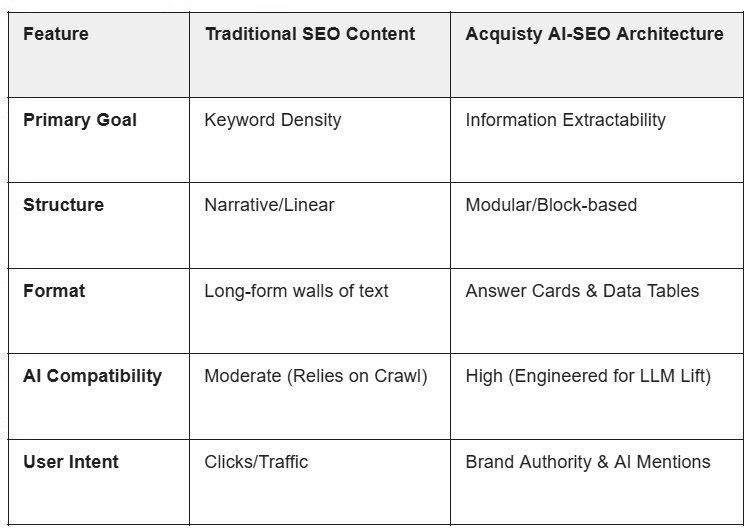
How Should You Architect Content for AI Extractability? : Here’s a Step-by-Step Guide
If you want to position your brand as a leader in your niche, follow this architectural blueprint for your next content piece :
- 1
The Contextual Hook : Start with your Answer Card. Summarize the entire article in 100 words.
- 2
The Prompt H2s : Turn your subheadings into the exact questions your customers are asking their AI assistants.
- 3
The Data Anchor : Insert a table, a bulleted list of “Key Findings,” or a cited statistic every 300 words.
- 4
The Nuance Block : End with a “Contrarian FAQ” section that addresses the complexities of your industry.
- 5
Technical Schema : Wrap this content in advanced Schema Markup (Product, FAQ and How-To) to give the AI a literal map of your data.
The Future is “Source-Driven”
We are moving into an era where being “searched” is less important than being “cited.” When a user asks an AI for a recommendation, you want that AI to say : “According to the research by Acquisty, Zero-Click Content is the standard for 2026.”
That level of authority cannot be bought with ads. It must be built through intentional, architectural excellence.
As a senior SEO Service provider agency with a decade of skin in the game, Acquisty doesn’t just write content, we build Information Assets. We ensure your brand isn’t just a part of the conversation, it is the conversation.
Ready to Architect Your Authority?
The transition from traditional search to AI-driven discovery is happening now. If your content isn’t structured for “The Lift,” you’re leaving your brand’s reputation in the hands of algorithms that can’t find your answers.
Partner with Acquisty now to get your brand cited in AI searches before your competitor does